DA / EN

AI at SDU

Priority areas

See an overview of potential priority areas that must be addressed in the near future.

Four focus areas

  • Education
  • Research support
  • Administration
  • Cross-disciplinary initiatives

The four focus areas have been identified by colleagues across the organisation as important themes to address. These identified areas are not final – they serve as a catalogue of potential initiatives. The next step is to prioritise and select a number of key areas to initiate in the near future.
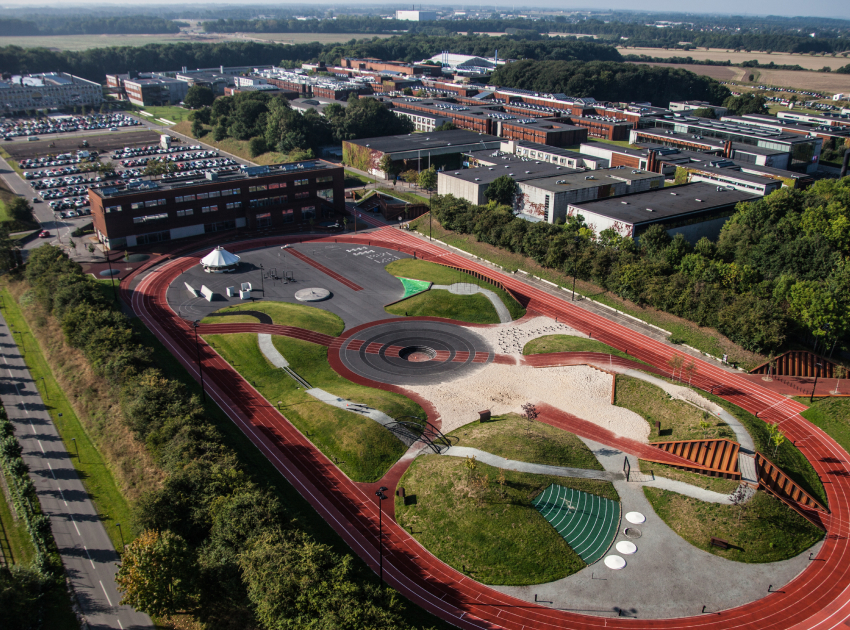
SDU's atletikbane set fra fugleperspektiv.

1. Re-design of examination formats

How do we develop examination formats that match a time in which AI is used as a tool by students and educators, and is increasingly and automatically embedded into the systems we use?

This creates new opportunities and expectations for how examinations are conducted, along with a range of dilemmas and major questions about what we are actually examining – and how it should be done. All programmes are already engaging with these questions, and there is a demand for joint initiatives and alignment across departments, as well as central support for developing new formats and enabling knowledge sharing across the organisation.

It may be worth considering designating one or more experimental spaces where we can test radical formats while still developing within existing frameworks.

2. StudyBots for students

An AI studybot must contain many layers of knowledge related to a student’s daily life and academic journey. This includes cross-disciplinary, general, and practical topics relevant to all students, as well as study‑specific and programme‑specific elements.

For example, we can experiment with a studybot that has access to all programme materials, the educator’s research, etc., so that an additional layer of support is developed in close dialogue with students and educators.

SDU should also consider using AI to support the study‑choice process. Other institutions have developed AI‑bots to assist prospective students based on study and course descriptions. This would be an obvious concrete initiative for SDU as well – otherwise, there is a real risk that young people will choose to study where they receive the most information and the best access to personalised communication during their study‑choice process.

3. AI in teaching development and delivery

How our programmes evolve in the near future will have a direct impact on our reputation. The university cannot continue with current teaching formats — AI as part of teaching and learning is not something that is on its way; it is already here.

There is a need for a prioritised focus on how AI can contribute to enhancing the quality of education, and for us to strategically ensure that students encounter a contemporary education with reflective and meaningful use of AI. Students are already using AI extensively, and many educators are actively integrating AI and redesigning their teaching.

There is a clear demand for prioritised central support to rethink teaching, including a pedagogical and didactic tech‑radar that keeps pace with developments and can provide recommended tools. At the same time, there is strong interest in facilitated knowledge sharing among educators who have already experimented with new formats, as well as among those who want to get started and seek peer‑based inspiration.

4. Server capacity and digital infrastructure to support research

For SDU to effectively support research in line with the rapid development in AI, a targeted investment and strategic enhancement across several areas is required. If SDU is to remain competitive in AI research, the infrastructure and support functions must be just as agile and modern as the research fields themselves.

There is enormous potential in using AI for data processing. Data processing that was previously too expensive has now become accessible in a completely different way. For SDU to support innovation with AI for handling complex datasets, including image analysis, a targeted investment in infrastructure, competencies, and resources is necessary.

Scalable computing capacity (GPU/HPC), secure and fast data storage, robust network infrastructure, as well as licenses and operation of AI platforms should be established. At the same time, it is crucial to ensure data security, compliance, and the development of interdisciplinary competencies. A focus in this area will also support SDU’s strengths and strategic initiatives within, for example, the drone field and the health sector, including the MedTech initiative. This effort can beneficially be aligned with one or more of these areas – not least in relation to external funding.

5. AI for research support processes – end-to-end

There is great potential in consolidating and integrating existing research support services—not organizationally, but communicatively. For example, combining SDU RIO’s tools, the library’s resources, and AI-based solutions into one complete package that can support researchers throughout the entire research and grant application process. This includes everything from idea development, literature searches, and interview transcription to data analysis, application processes, matchmaking with collaboration partners, and contract management.

Such a holistic approach can both increase efficiency and support the identification of new opportunities and new forms of collaboration across research fields. In many cases, there will also be valuable opportunities to optimize the functionalities of existing products.

Do you have any questions?

You are always welcome to contact us if you have questions or need sparring about the use of AI.