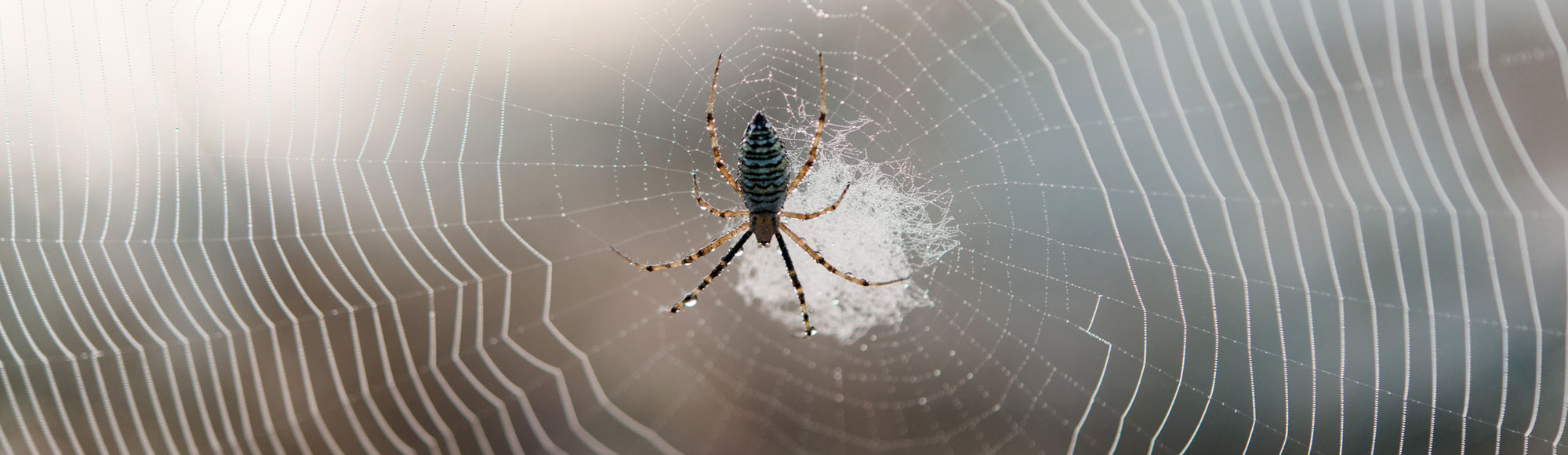
SDU entrepreneur aims to make clothes from spider silk
Drawing inspiration from nature’s own solutions, Irina Iachina is working to develop a sustainable alternative to elastane. As a researcher and entrepreneur, she aims to translate research into spider silk into new materials that can reduce the textile industry’s carbon footprint.
This is precisely the challenge Irina Iachina is tackling. As founder and CEO of Biomimica, she aims to translate research into spider silk into a material that can eventually be used in the textile industry.
”At first, I noticed a great deal of interest from colleagues, and several began to board the technology as a potential business idea. This motivated me to think in terms of practical applications: how can research create tangible value outside the university? That interest helped open my eyes to the fact that there was also commercial potential.
A chip that spins threads just like nature
For the past 14 years, the University of Southern Denmark has been the setting for Irina Iachina’s academic career, as she has completed her entire education at SDU, earning her bachelor’s, master’s and PhD degrees.
Today, she and her fellow researchers in the EkoSilk project are working to develop a lab-on-a-chip that mimics the way spiders spin silk – only on a microscopic scale. The aim is to develop a sustainable alternative to elastane, the oil-based stretch material used in everything from underwear to sportswear.
One day, unique silk may be found in the fitting room and in space
Spider-silk-inspired fibres can be stronger than steel, more elastic than elastane and, at the same time, biodegradable. At Biomimica, the technology is being further developed through a bio-inspired microfluidic chip, which aims to enable the production of strong and elastic fibres as a more sustainable alternative to the materials currently used in the textile industry.
If production can be scaled up successfully, the technology could eventually pave the way for the manufactured silk to be used in high-performance textiles within the medical sector, aerospace and defence.
Ordinary clothing can also be made using this silk, thanks to its extraordinary mechanical properties, whilst it is also beneficial for the environment as it is made exclusively from proteins.
EkoSilk brings together researchers from various academic disciplines at SDU. The aim is not merely to produce silk fibres, but to be able to control their properties so that their strength and elasticity can be tailored to different applications.
When research meets business
The transition from researcher to entrepreneur has also meant a change in the way she works. Irina Iachina highlights one of the classic challenges for research-based spin-offs: research rewards openness and knowledge-sharing, whilst a business needs to protect its knowledge.
– In research, you’re rewarded for publishing and sharing. When something is to be developed into a business, the logic is reversed. You have to hold back on sharing information. It’s a difficult shift, because visibility is otherwise the way you document your work.
However, she does not feel that her role as CEO has detracted from her research – quite the opposite.
– I don’t think so. On the contrary, the business and societal perspectives have strengthened my interest in research, because it becomes clear just how important a strong academic foundation is when developing new technology. At the same time, the experience has sharpened my focus on research that can create value for society relatively quickly.
Strong support from the university
Irina Iachina didn’t have a fully formed business plan from the outset. A crucial step came when she – almost by chance – was made aware that her research might have commercial potential. Since then, the project has grown, and today she has one foot in research and one in the business.
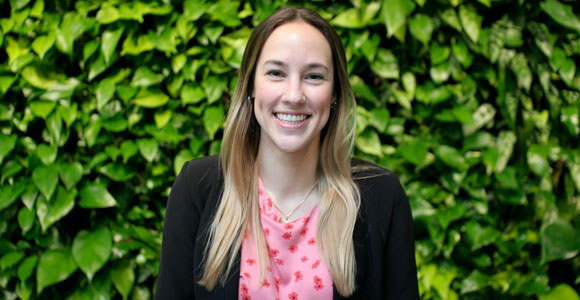
As a researcher, she develops new knowledge and seeks research funding. As CEO, she works with investors and on business development.
It requires many hours and a great deal of dedication, she explains. Along the way, she has received tremendous support from SDU RIO, which advises researchers and students wishing to turn their knowledge into businesses and new solutions.
– Having that support has been incredibly important. It’s a bit like throwing yourself out into the open sea, because there are so many practical matters to deal with when you’re setting up a business. That’s why it really means a lot to have guidance every step of the way.
Meet an innovator
Innovator of the Month is a series that portraits persons who works with innovation at or from SDU. This time, we’re featuring Irina Iachina, CEO of Biomimica, a company that grew out of the Ekosilk research project at SDU.