![]()
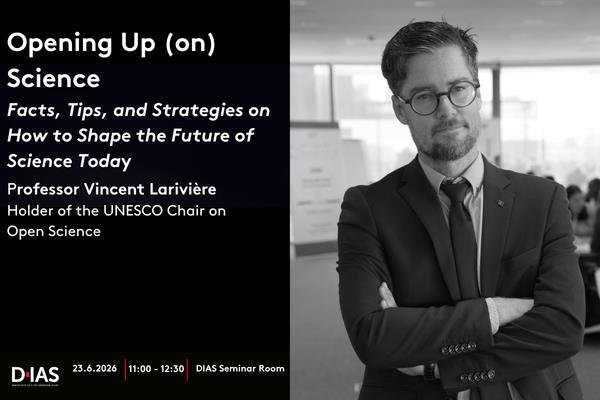
Open science is transforming the research landscape in ways that touch every aspect of academic life. It is changing how science is conducted, written, evaluated, funded, and disseminated, across all disciplines and at each step of the scholarly career path. For early-career researchers, this shift brings both opportunities and challenges: how do you build an open science practice that strengthens rather than complicates a career still taking shape? For seasoned researchers, it raises equally pressing questions about mentorship, responsibility, accountability, and integrity. Institutional, governmental, and international policies and initiatives help frame the agenda here, but it is really how individual researchers engage with openness in their daily practice that drives these larger-scale initiatives, determines their success, and ultimately shapes the future of science.This event features a keynote presentation by Professor Vincent Larivière, holder of the UNESCO Chair on Open Science and one of the leading voices on scholarly communication, followed by an open Q&A session. Professor Larivière will map the current landscape of open science, what it means, where it is heading, and how it is increasingly shaping expectations in academic publishing, research funding, and career evaluation. The floor will then open for questions, with a focus on the issues that matter most:
- What is open science and why is it necessary?
- What is already open, what can be opened, and what can’t?
- How do you find the right balance between your own survival and the greater good of science?
- How do you open up your research without exposing yourself?
- What can you justifiably ask of your colleagues, peers, and students?
- Who can lend a hand, and how?
This event is designed for open-minded researchers from all fields and at all stages of their career.
Vincent Larivière is a full Professor at the
École de bibliothéconomie et des sciences de l’information at the Université de Montréal (EBSI), where he teaches bibliometrics and research methods in information science while supervising numerous emerging researchers.