Vejleder: Changzhu Wu
Projektbeskrivelse
The extensive use of pesticides has been indispensable in ensuring global food security, yet conventional formulations suffer from a fundamental limitation: their inability to adhere effectively to the hydrophobic and waxy surfaces of crop leaves. As a consequence, the majority of sprayed droplets slide off, leading not only to agronomic inefficiency and economic losses but also to severe ecological risks, including soil contamination, groundwater pollution, and threats to surrounding biodiversity1. In response to this challenge, numerous strategies have been developed to improve pesticide adhesion. Surfactants and adjuvants have been introduced to alter droplet surface tension and spreading behavior, while encapsulation techniques such as nanoemulsions and polymeric carriers have sought to stabilize active ingredients and prolong their effectiveness. More recently, biopolymer-based carriers derived from natural sources like chitosan, starch, or lignin have been explored to reduce environmental impact and enhance compatibility with sustainable farming practices.
Despite these advances, significant limitations persist. Conventional surfactants provide only short-term improvements and often add toxicity concerns. Synthetic polymer carriers, though effective, rely heavily on non-renewable petrochemical resources, raising sustainability issues. Meanwhile, natural biopolymers, although environmentally benign, offer limited structural tunability, poor stability under field conditions, and inconsistent rainfastness. These challenges highlight an urgent need for a new generation of pesticide delivery systems that combine functionality, sustainability, and scalability.
This project seeks to address these unresolved problems through a multidisciplinary approach that bridges polymer chemistry, materials science, and agricultural technology. We propose to transform non-edible plant oils—an abundant and underutilized byproduct of agricultural and forestry waste—into high-purity, polymerizable functional monomers. Using advanced polymerization techniques such as ATRP, RAFT, and step-growth polycondensation, we will design and synthesize polymers with tailored architectures and functional groups, enabling precise control over adhesion, release, and environmental compatibility. These polymers will then be formulated into stable emulsions capable of encapsulating pesticide active ingredients. The resulting droplets are expected to exhibit superior adhesion to leaf surfaces and remarkable resistance to wash-off under rainfall, thereby reducing pesticide loss, enhancing efficacy, and minimizing environmental contamination. Previous research has demonstrated our group's extensive experience in the preparation and characterization of Pickering emulsions2. We believe this serves as a crucial foundation for the successful execution of this project.
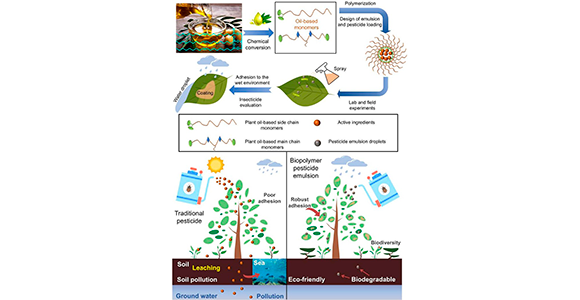 Figure 1 Strategies for the construction of plant oil-based pesticide emulsions.
Beyond providing a technical solution, this research embodies the principles of green chemistry and sustainable agriculture. By using non-edible plant oils as renewable feedstocks, the project not only reduces reliance on fossil resources but also contributes to circular bioeconomy pathways. The integration of advanced polymer design with real-world agricultural needs represents a forward-looking model for environmentally responsible innovation. Through this project, we aim to deliver a new class of bio-based pesticide formulations that combine high performance with ecological stewardship, offering both immediate benefits to crop protection and long-term contributions to sustainable farming systems.
Reference
1. Luo J, Gao Y, Liu Y, et al. Self-assembled degradable nanogels provide foliar affinity and pinning for pesticide delivery by flexibility and adhesiveness adjustment. ACS nano, 2021, 15(9): 14598-14609.
2. Sun Z, Hübner R, Li J, et al. Artificially sporulated Escherichia coli cells as a robust cell factory for interfacial biocatalysis. Nature communications, 2022, 13(1): 3142.