Insights and aha moments from the work on the academic organisation at SDU Business School
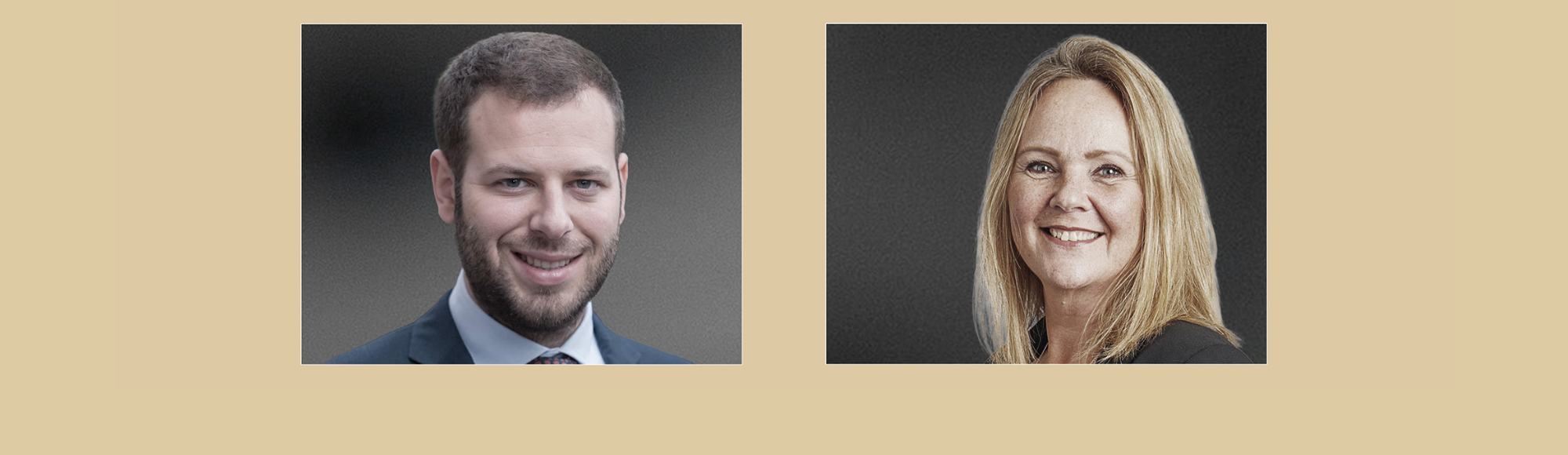
What will the academic organisation at SDU Business School look like in the future? A working group has been tasked with exploring possible organisational models, and here two of its members, Majbritt Rostgaard Evald and Victor Martin-Sanchez, share insights from the process.
The working group focusing on the future academic organidation of SDU Business School has recently submitted its report. The next step is a consultation phase, and the Steering Committee is expected to take a position on the proposal on April 27.
In this article, Professor Majbritt Rostgaard Evald and Associate Professor Victor Martin-Sanchez reflect on the key insights and experiences they are taking with them from the work.
What has been positive for you in participating in this work?
Majbritt: The most positive aspect has been deceloping a shared understanding of what a sustainable organisation of research requires. We have had valuable dialogues with colleagues across all campuses, which have contributed both to greater insight and stronger cohesion.
It has also been very encouraging to see that, despite differences in history, practices, and cultures, we share a clear desire for stability, academic freedom, and clear organisational frameworks. This provides a solid and shared starting point for the work ahead.
Victor: Bringing together colleagues from different areas, backgrounds, and levels of seniority has made this working group both inclusive and enriching. It has also given me the opportunity to gain insights into leadership and administrative aspects that I would not normally engage with in my day-to-day work focused primarily on research and teaching.
At the same time, the process has highlighted the value of engaging colleagues across campuses to develop a more comprehensive understanding of the needs and expectations for the future research organisation of SDU Business School. These exchanges have contributed to identifying common priorities and creating a stronger sense of alignment.
Finally, the discussions have encouraged us to take a more holistic perspective, exploring how other institutions are organized and reflecting on how some of these models might inspire us in shaping the new SDU Business School.
Has anything been challenging in this work?
Majbritt: Balancing administrative and academic logics has been a challenge. When administrative tasks are embedded into research groups, it can create ambiguity and the risk of imbalances. For that reason, I have suggested a structure where we operate under transparent principles across research groups and campuses – both to ensure good working conditions and to support a research environment where everyone can deliver on the KPIs we are committed to.
In a multi-campus reality like ours, it has also been important to identify a model that ensures local presence and relevance without becoming unnecessarily complex.
Victor: One of the main challenges is the integration of the scientific organisation of two departments as part of establishing a unified business school. This requires aligning different cultures, research orientations, organisational structures and ways of working – which is a complex task.
In this context, developing well-grounded recommendations for the key areas or groups that could form the main pillars of the business school is particularly demanding. The diversity in disciplinary backgrounds, research priorities, and organisational practices makes it challenging to identify structures that are both coherent and inclusive while also reflecting the strengths of each department. Balancing these differences and translating them into a shared vision requires careful consideration and ongoing dialogue.
How did you gather input from your colleagues during the process?
Majbritt: We have worked systematically to collect perspectives from colleagues across all campuses through survey, meetings, feedback sessions, and thematic discussions.
An important input came from an online discussion with colleagues in Jutland, where the messages were very clear, among other things the need for stability, academic freedom and autonomy, and the importance of each campus having critical mass and a sustainable research environment. These perspectives are likely widely shared among colleagues and helped clarify what is top of mind. That was very valuable for the work.
Victor: We have gathered input through a combination of informal and more structured approaches - from one-to-one informal discussions with colleagues to group level discussions and online hearings - where colleagues were invited to share their views, interests, and concerns, as well as provide general observations on the process.
Finally, we have carefully reviewed the feedback received and, where relevant, incorporated it into the development of the advisory document.
What are your main takeaways from the working group?
Majbritt: I take away three key points from the work.
First, the organisational structure must support the multi-campus structure and our regional role. SDU Business School has a unique strength in our local presence – close to companies, municipalities, and public actors throughout Southern Denmark. This gives us a strong position when it comes to understanding and contributing to regional development agendas. Realising this potential requires a simple and recognisable organisational structure that is easy to navigate both internally and externally.
Second, clear principles and uniform frameworks create an environment of trust, stability, and academic focus. It is essential that all campuses operate under the same standards and frameworks, where fairness and transparency form the basis for quality.
Finally, there is a strong and clear commitment to build a unified business school. Despite differences in culture and practices, there is strong engagement among staff, which provides a solid shared foundation for creating a coherent organisation - both academically and structurally.
Victor: One of my main takeaways is a deeper appreciation of the importance of designing an organisational structure that balances coherence with diversity. Bringing together different disciplinary backgrounds, research traditions, and ways of working requires a framework that both provides clear direction and allows for flexibility.
I also take with me the importance of establishing shared principles and transparent structures that can support collaboration across campuses while maintaining strong local research environments. This is essential for building a cohesive and sustainable business school.
Finally, the process has reinforced the value of inclusive and well-structured consultation. Engaging colleagues throughout the process not only improves the quality of the outcomes but also strengthens collective ownership and alignment around the future direction of the school.
What do you think the organisation of scientific work at SDU Business School will look like in a few years?
Majbritt: Looking a few years ahead, I expect an organisation where SDU Business School uses its multi-campus profile as a strategic strength. Our regional presence provides unique opportunities, while we also maintain a strong national and international position through high-quality research. The future structure should therefore support both proximity and quality – not as opposites, but as mutually reinforcing elements.
Cross-campus communities will be driven by academic interests and strategic opportunities, and the organisation should make it possible both to deliver high-quality research and to stay closely connected to the partners and stakeholders where our knowledge makes a difference. The combination of strong research, international reach, and regional engagement should characterise SDU Business School in the years to come.
Victor: From my perspective, the organisation will likely continue to be structured around a set of core pillars rooted in the main areas of knowledge and aligned with internationally recognized fields of research, reflecting the structures adopted by leading and comparable business schools. These core areas tend to be relatively stable and provide a clear foundation for identity and academic positioning.
At the same time, there may be more flexibility within subgroups or sub-pillars, allowing the organisation to evolve and adapt to emerging research interests, collaborations, and strategic priorities. Ultimately, the final shape of the organisation will depend on future leadership decisions and the direction set for the business school.
More about the working groiup
The working group was tasked with exploring possible organisational models for SDU Business School, including the consolidation of the current research groups.
The group has, among other things, drawn inspiration from other business schools and mono-disciplinary faculties in Denmark.
Members of the working group:
- Dean Hanne Søndergaard Birkmose (Chair)
- Professor Domen Bajde
- Professor Nicole Richter
- Associate Professor Victor Martin-Sanchez
- Professor Per Freytag
- Professor Majbritt Rostgaard Evald
- Associate Professor Stephanie Sohn
- Vice-Dean Kristin B. Munksgaard